The Mold Is Often the Clue, Not the Whole Problem
Moisture control is the first building question.
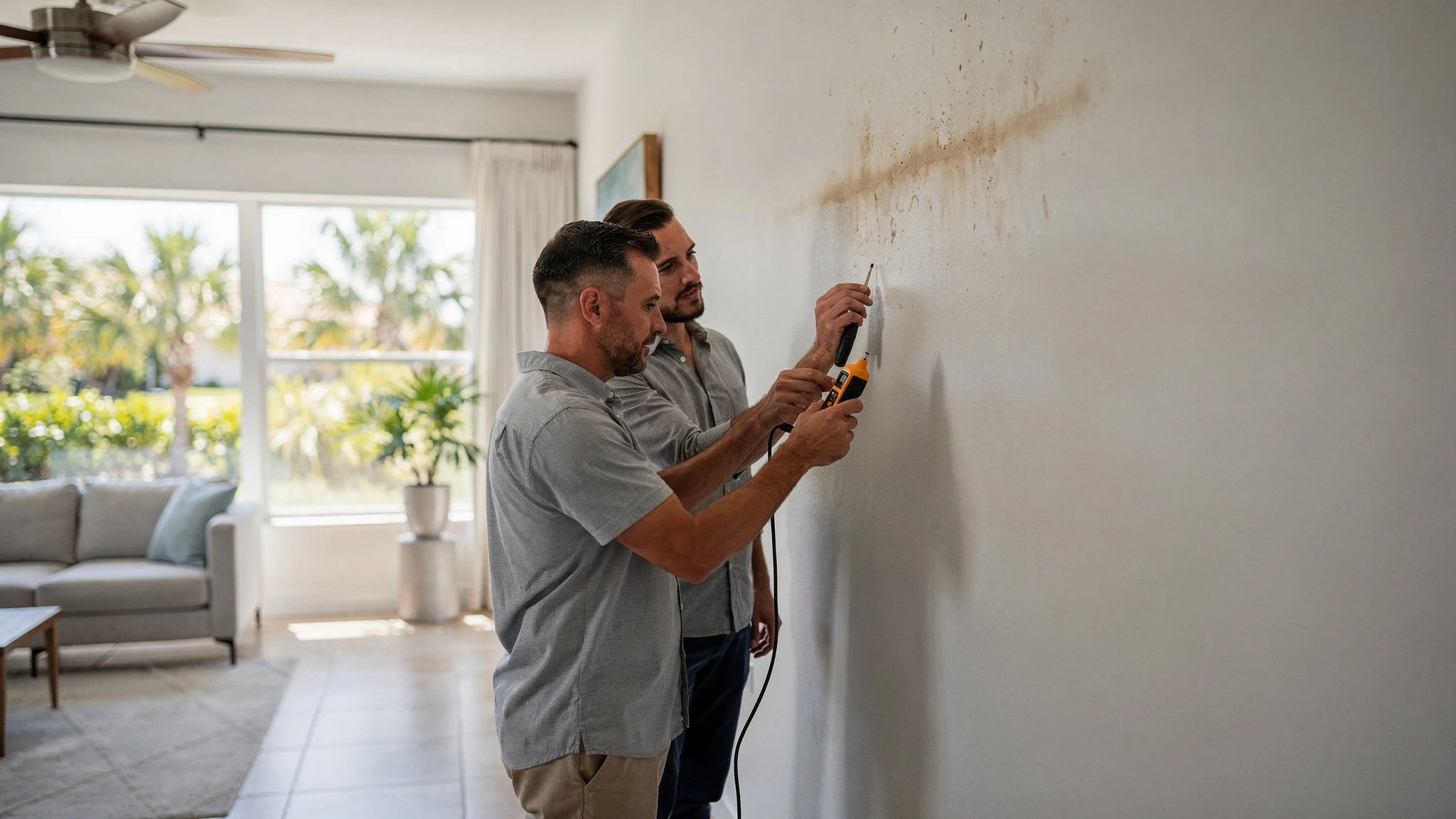
- Find the moisture source.
- Stop the water problem.
- Review damaged materials.
- Decide if a mold assessment is needed.
- Separate cleanup from repair.
- Check the final repair scope.
EPA guidance: A Brief Guide to Mold, Moisture and Your Home.
What a Buyer Can Observe
A clue is not the same as a diagnosis.
- Water stains on ceilings or walls.
- Swollen baseboards or cabinets.
- Musty odors.
- Roof or plumbing leak history.
- Window or door water entry.
- Air-handler or drain-pan moisture.
- Recent flood or storm intrusion.
- Fresh paint over an old damaged area.
These signs can support more questions. They do not prove the type, source, or full extent of mold.
Visible Mold Does Not Always Require Testing
Testing should answer a useful question.
EPA and Florida health guidance say visible mold often does not need routine sampling to prove a mold problem exists.
- Ask what the test should answer.
- Ask how the result may change the repair plan.
- Ask who will read the result.
- Do not treat one air sample as a full building review.
Florida guidance: Florida Department of Health — Mold.
Property Questions and Health Questions Are Different
Property professionals review the building. A doctor reviews health symptoms.
Florida health guidance says some people may have allergy, asthma, or other reactions around damp or moldy areas.
The same guidance says some reported symptoms have causes that are not well understood.
Color Does Not Decide the Property Risk
“Black mold” is not a complete buyer conclusion.
Florida health guidance says indoor mold growth should be addressed no matter the color or type.
- Focus on the moisture source.
- Review the affected area.
- Check damaged materials.
- Use qualified help when needed.
Know the Florida Professional Roles
One license does not replace every other role.
Home inspector
Reports visible conditions within the inspection scope and may suggest more review.
General contractor
Reviews building systems, repairs, water-entry causes, and rebuilding within the contractor's legal scope.
Mold assessor
Performs mold assessment work within Florida's mold-services rules.
Mold remediator
Performs mold cleanup work within Florida's mold-services rules.
Doctor
Reviews health symptoms and medical risk.
Licensing: Florida DBPR Mold-Related Services.
Scope FAQ: Florida DBPR Mold-Related Services FAQs.
The 10-Square-Foot Number Needs Context
Do not turn one number into a universal DIY rule.
EPA says many small areas under about 10 square feet can often be handled by a homeowner.
Florida rules separately define some mold work involving growth greater than 10 square feet.
Dirty water, hidden growth, HVAC mold, large water damage, or health risks can change the right response.
Cleanup Is More Than Killing Mold
Bleach is not the whole answer.
EPA does not recommend chlorine bleach as the routine method for mold cleanup.
Dead mold can still cause reactions. Some material may need cleaning or removal, and the moisture source still needs repair.
Painting over moldy material before cleanup and drying can hide the condition without fixing it.
Separate Cleanup From Repair and Rebuilding
These scopes can involve different workers and costs.

- An assessor reviews the mold concern.
- A remediator handles mold cleanup.
- A plumber may fix a pipe leak.
- A roofer may fix roof entry.
- An HVAC contractor may fix an air issue.
- A contractor may handle rebuilding.
Use Property-Specific Scopes and Bids
A universal mold price can mislead a buyer.
- Measure the affected area.
- Review hidden damage.
- Separate cleanup costs.
- Separate source repair.
- Separate rebuilding.
- Get written scopes and bids.
Mold Does Not Tell You Whether Insurance Will Pay
Coverage depends on the policy and the cause of loss.
- Ask what caused the moisture.
- Ask if the cause was sudden or long-term.
- Ask about prior claims.
- Review mold limits and exclusions.
- Review the proposed policy before closing.
Review the Florida homeowners insurance binder guide.
Use the Inspection Period Carefully
The contract controls the buyer's deadlines and options.
- Document the concern.
- Check the inspection deadline.
- Decide if a mold assessment is needed.
- Get written findings.
- Price the moisture repair.
- Price mold cleanup separately.
- Price rebuilding separately.
- Review contract options before the deadline.
Do not assume the seller must repair the condition, give a credit, or cancel the contract.
South Florida Moisture Control Matters
Humidity, leaks, storms, floods, and HVAC problems can all create moisture.
EPA says wet materials should be dried fast, often within 24 to 48 hours. The water source also needs repair.
A humidity reading can help with a building review. One reading does not prove that a home is safe from mold.
Avoid Zero-Mold Guarantees
Mold spores naturally exist indoors and outdoors.
EPA says full sterilization is not a realistic cleanup goal.
The better goal is to fix moisture, address damaged material, and check the work against the agreed scope.
Professional Questions a Buyer Should Ask
- What caused the moisture?
- Is the source still active?
- What materials are affected?
- Is a licensed mold assessor needed?
- What work belongs to mold cleanup?
- What work belongs to repair or rebuilding?
- What does the insurance policy say?
- What contract deadline applies?
Mold and Moisture FAQs for South Florida Buyers
Does visible mold always require testing?
No. EPA and Florida health guidance say visible mold often does not need sampling. Ask a mold professional if testing would help.
Is black mold always more dangerous?
No. Color alone does not show the level of risk. Florida health guidance says indoor mold growth should be addressed.
Who can assess mold in Florida?
Florida DBPR licenses mold assessors and mold remediators. Check the individual license and the work that person will do.
Can a home inspector diagnose mold?
A home inspector can report visible conditions within the inspection scope. A mold assessment is a separate service when needed.
Does homeowners insurance cover mold?
It depends on the policy and the cause of loss. Ask an insurance professional to review the actual policy.
Can a buyer ask for remediation before closing?
A buyer can raise concerns and make contract requests. The contract controls deadlines, inspection rights, and buyer options.